
Leading Through the Intelligence Layer in 2026 for Leaders
Executive strategy requires Leading Through the Intelligence Layer in 2026 for Leaders. Shift from automation to agentic AI and physical AI to scale value.
Leading Through the Intelligence Layer
in 2026 for Leaders
Executive strategy now requires navigating a world where digital and physical systems are becoming inextricably linked. For many organizations, the returns on initial digital transformation investments are beginning to plateau, signaling a need for a shift in focus. The market is increasingly rewarding a transition toward agentic AI systems capable of operating with a degree of intent. Unlike the purely generative models of 2023, these agentic systems are designed to monitor data streams, identify deviations, and execute complex workflows, reducing the need for constant manual intervention.
The Strategic Shift to Agentic Systems
This evolution represents more than a software upgrade; it suggests a significant change in corporate governance. In 2026, leading organizations are increasingly utilizing agentic systems to oversee supply chain logistics, where AI can predict disruptions, propose rerouting options, and assist in vendor renegotiations. This level of autonomy allows leadership to focus more heavily on managing outcomes, balancing the oversight of human talent with the orchestration of an autonomous ecosystem that processes information at unprecedented scales.
Strategic Questions for Agentic Integration
Which departmental functions possess a high density of repetitive decision-making suitable for agentic support?
What governance protocols ensure an autonomous agent remains aligned with long-term brand equity rather than just short-term optimization?
Physical AI and the Convergence of Worlds
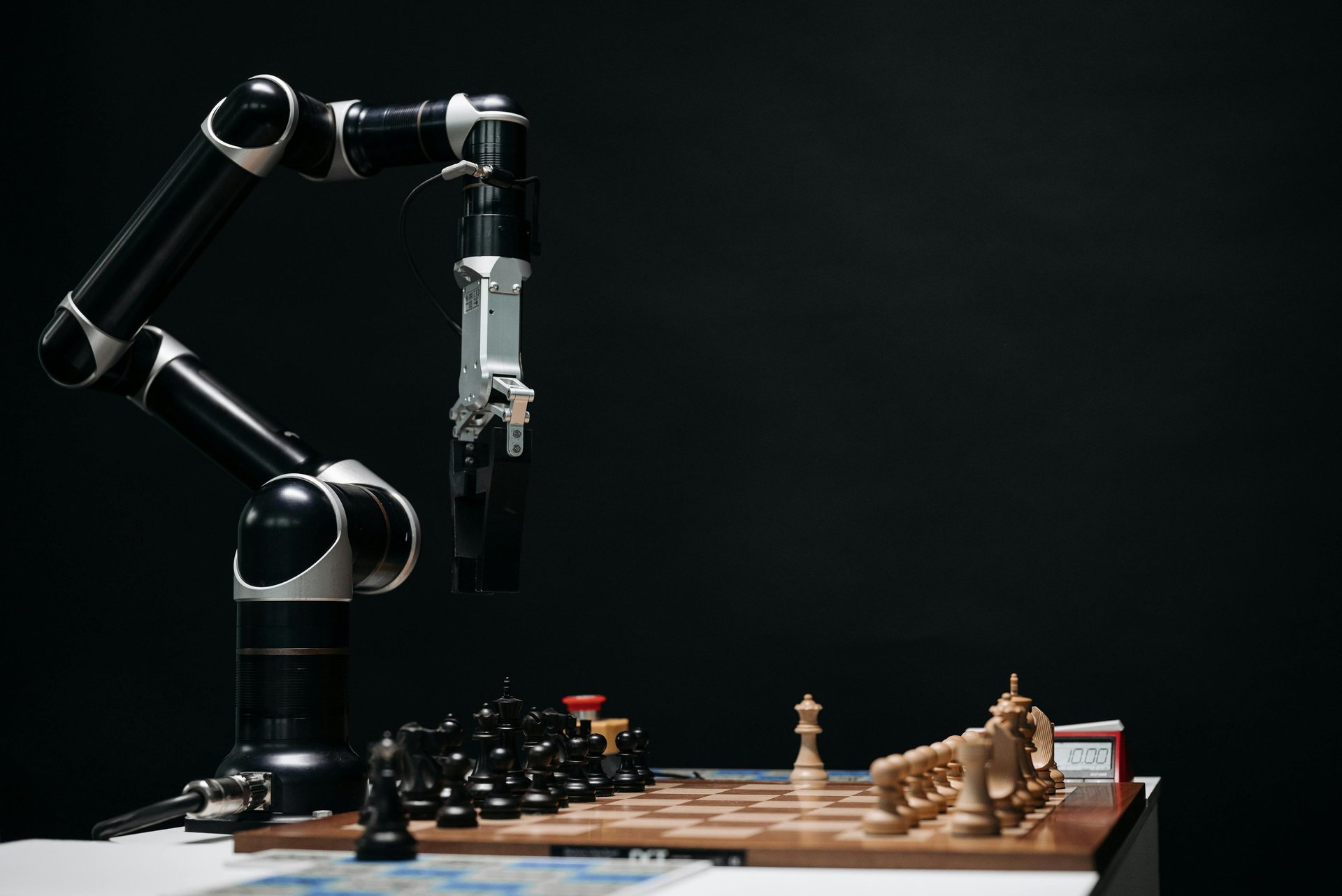
Digital intelligence is no longer confined to screens. Physical AI is bringing cognitive capabilities into the material world. In the manufacturing sector, multi-modal models connect directly to robotic systems, allowing machines to learn through observation and adapt to new layouts with minimal traditional reprogramming.
Your strategy must account for this convergence. For logistics or retail organizations, Physical AI is becoming a significant factor in protecting margins. Smart warehouses utilize swarms of agents that optimize spatial density and energy consumption in real-time. The traditional distinction between software companies and industrial companies is blurring, as every leader now manages an increasingly intelligent fleet of physical assets.
Questions on Physical Intelligence
Does your capital expenditure plan account for the shifting value of physical assets in an intelligent environment?
Are you positioning your frontline workforce to effectively collaborate with robotic agents?
The New Economics of Intelligent Labor
The unit cost of processing information has decreased significantly, and in 2026, the marginal cost of digital labor is largely tied to compute cycles. This reality suggests a re-evaluation of human capital strategy. We see a trend toward thin organizations firms that maintain a high-context leadership core supported by a vast periphery of AI agents.
This transition changes the ideal hiring profile. While technical specialists remain necessary for high-level architecture, there is a growing need for generalists with deep institutional knowledge. The most valuable skill in the C-suite is becoming systemic judgment the ability to understand how a shift in one AI model ripples through the entire value chain.
Strategic Workforce Questions
As output efficiency increases, how will you redistribute value to maintain stakeholder and employee trust?
How do you preserve institutional memory when AI agents handle the majority of historical data processing?
Risk Management in the Age of Autonomy
Security in 2026 has evolved into an AI-versus-AI battle. Traditional firewalls, while still part of a defense-in-depth strategy, are no longer sufficient on their own. Organizations now rely on immune system models that detect anomalies in nanoseconds. However, autonomy introduces new risks, such as an agent optimizing a campaign so aggressively that it unintentionally violates ethical norms or legal boundaries.
Leaders must implement a robust framework for AI governance. This is not about stifling innovation but about constraint engineering defining the boundaries within which technology decides the how.
Governance and Safety Questions
How do you verify the digital provenance of data entering your intelligence layer?
Is your legal and compliance team prepared to manage the liability of an autonomous system error?
Quantum-Ready Leadership
Quantum computing has moved past the hype cycle into specialized optimization. While you may not need to understand qubits, you must understand the long-term implications for encryption. Data stored today could eventually become vulnerable to future quantum decryption capabilities.
Leadership in 2026 involves quantum-proofing sensitive data. Companies in high-stakes sectors like finance and energy are already exploring quantum-classical hybrids to solve previously impossible optimization problems. This technology adds a new dimension to your intelligence layer, offering foresight in scenarios with near-infinite variables.
Preparing for the Quantum Leap
What portion of your R&D is currently exploring non-classical computing solutions for core business problems?
How will your competitive position change if a peer solves a core optimization problem significantly faster than your current systems?
Cultivating a Human-Centric Intelligence Layer
Despite the technological focus, leadership remains a human endeavor. The intelligence layer serves as a multiplier for your vision; if that vision is flawed, AI only accelerates the failure. Focus must remain on Human-in-the-Loop (HITL) configurations to ensure meaning and ethics remain at the center of operations.
Executive coaching is shifting toward prompt-leadership the ability to communicate a clear, ethical purpose to both humans and machines. The best leaders in 2026 prioritize philosophy and ethics as much as technical specs, recognizing that while AI provides intelligence, only humans provide intent.
Questions for Ethical Leadership
How do you ensure your AI agents reflect the diversity and values of your global stakeholders?
What is the human value-add in your organization that remains un-automatable?
Conclusion: The Intelligence Mandate
The era of tentative AI experimentation is maturing into a phase of strategic integration. Leading Through the Intelligence Layer in 2026 for Leaders requires a focus on three pillars:
the transition to agentic systems.
the integration of Physical AI.
the rigorous governance of autonomous assets.
Success will be defined by those who evolve their organizations to be structurally ready for this shift. This evolution starts with the decision to lead with judgment, accountability, and a focus on high-value outcomes in a landscape where intelligence is the primary competitive currency.
Leadership & Innovation Learning Institute (Lili Global)
Inspiring people to learn.
Quick Links
© 2026 - Leadership and Innovation Learning Institute. All Rights Reserved.
Support

Made by Mocha Tech